
The slow return to Paris: how tourism is taking time to recover

Close-up of Paris Eiffel Tower badge on a fence in Paris, France

As bistros go, L’Ami Pierre, a low-key establishment on rue de la Main d’Or in the 11th arrondissement, is as Parisian as they come. Black-and-white photographs, vulgar cartoons and framed Charlie Hebdo covers hang on the walls. Steak knives and wine glasses sit neatly on small tables laid with white tablecloths. With the first round of diners still to arrive, half a dozen regulars stand against the silver-topped bar, drinking wine and debating the gentrification of their neighbourhood.
The restaurant could probably seat about 30 customers. On the night of 13 November 2015, when Paris fell victim to a series of deadly attacks across the city– including at busy restaurant La Belle Equipe, just five minutes’ walk away – it managed to squeeze in 80 as terrified people took shelter inside. Its owner, Robin Greiner, pulled down the metal shutters on the front, offered everyone a couple of rounds of wine on the house and refused to let anyone leave until 4am.
Exterior daytime shot of L’Ami Pierre restaurant, Paris, France.
Pinterest
 L’Ami Pierre. Photograph: Camille Sauvayre
Now, almost100 days on, though the memories of that night linger, Paris is back on its feet. But while locals are moving forward, visitors from other countries have been slower to return.
“We went back to normal because here, we don’t [normally] have many tourists,” says Greiner. “But we had a faithful Japanese clientele that would come because we’re featured in Japanese travel magazines. They disappeared overnight and they still haven’t returned.”
For businesses that do depend on tourists, it has been a difficult winter. November’s attacks took place predominantly across a multicultural, buzzing part of Paris: around the Canal Saint-Martin, rue de Charonne and boulevard Voltaire. The neighbourhood has a close-knit community of independent bars, restaurants and hotels, and is popular with younger visitors.
A man sits at the bar at Les Piaules hostel, Paris.
Pinterest
 Les Piaules hostel opened just two weeks after the attacks. Photograph: Arnault de Giron
It’s chilling to imagine these streets falling eerily quiet but, in November and December, many of these businesses experienced a significant lull. It was into this climate that one of the city’s newest hostels, Les Piaules, was born. This trendy bolthole, with beds for 162 people, opened last December on boulevard de Belleville – home to a hectic street market on Tuesdays and Fridays – barely two weeks after the attacks.
On the ground floor of the 1930s art deco building is a DJ bar, on the top, a roof terrace with views of the Eiffel Tower, Sacré-Coeur and La Défense. “[At first], we worried for the people we knew,” says Louis Kerveillant, one of three young entrepreneurs who founded the hostel. A friend of his, he tells me, was among those killed at the Bataclan theatre that night. “For the first two weeks, I was in shock,” he says. “Even after three years [of preparation] and a lot of money, we weren’t thinking about the work.”
The team decided to go ahead with the opening regardless: “Our role as entrepreneurs and business owners is not to close shop,” says Kerveillant. But foreign visitors took a rather different view. In December, occupancy was just 35%, in January it was 50% and only now has it risen to more than 60%.
“Guests said their governments were advising them not to come to Paris,” says Kerveillant. “This was frustrating.”
People continue to leave tributes to victims three months after the terrorist attacks in Paris.
Pinterest
 People continue to leave tributes to victims three months after the terrorist attacks in Paris.
Photograph: Getty Images
Another hotel that had a tough start is Hotel Providence (90 rue René Boulanger), close to Place de la République, which opened last October. “When the attacks happened, we lost 40-50% of our existing bookings overnight,” says owner Elodie Moussié. “Only since mid-January has it got better.”
Five hundred metres away, past streets still dotted with the odd soldier – Paris’s state of emergency, which was this week extended until late May, has prolonged the impact of the attacks on businesses – are two of the cafes that were targeted by gunmen last November. Cafe La Bonne Bière, on rue du Faubourg-du-Temple, and Casa Nostra (rue de la Fontaine-au-Roi) have both now reopened, but flowers and hand-decorated notes dedicated to the victims still line the street outside.
Inside La Bonne Bière, it’s difficult to imagine the events of that night. To a soundtrack consisting of French-language covers of classic rock tunes, people sit on the terrace drinking coffee and life continues as usual outside.
A group of US exchange students sit down for lunch, having come to the area to visit the République monument, which remains a memorial to those killed. They admit that they’ve been coming into the city centre less since the attacks.
The Casa Nostra restaurant was targeted by terrorists in November.
Pinterest
 The Casa Nostra restaurant was targeted by terrorists in November. Photograph: AFP/Getty Images
“I had a friend who came over for Christmas,” says Andrew Calder, 30, from California. “All her friends were saying, ‘don’t go – you’re crazy’. I had to really reassure her it was OK. It seems the perception is that it’s still a dangerous place to go.”
Just around the corner is one of the area’s most popular venues: bar, club and restaurant Le Comptoir Général (80 quai de Jemmapes). Some staff members went to help at the restaurants that were targeted by the attackers and psychological support had to be arranged for everyone that works there. “In the short term, we really had to face the question: how do we go on?” says Céline Degrave, one of its directors. “We are a place of entertainment. How do you [keep] your will to entertain after that?”
Degrave says customer numbers fell by almost half for over a month, and that when people did come, “they would not stay long”. Le Comptoir Général teamed up with other local businesses to start a campaign – Le Remontant – to encourage people to go out in east Paris again, with bars, cafes and restaurants offering customers a special drink, shot, dessert or cocktail to be bought in the name of solidarity, with some of the proceeds going to the French Association of Victims of Terrorism (afvt.org).
“Maybe by March or April, things will be back to normal,” she says. “But the real test will come in May and June; these are [usually] strong months for bars and restaurants, with lots of long weekends, tourists and warm weather.”
Inside Le Comptoir Général, a popular venue in Paris.
Pinterest
 Le Comptoir Général is part of a campaign to encourage people to go out again in this part of Paris.
While a bigger establishment like Le Comptoir can weather a storm, it is the smaller businesses, especially those that feed off the major tourist attractions, that have Degrave’s sympathies. “Visitor numbers to the Musée d’Orsay dropped by 40%,” she says. “I know a restaurant that [relied on these visitors] – none of the staff has been paid for three months.”
Saveurs and Co, a small cafe on rue de Bellechasse between the Musée d’Orsay and the Musée Rodin, says the tourists just disappeared at the end of last year. “We’ve been open since 2008 and December is usually a good month for business,” says owner Stefan Rouillier. “But last year, it was very sad and very bad. During the Christmas holidays, there were no tourists: no Europeans, Australians, Americans. Even now there are less. We think tourists will come back fully in April.”
But financial impact aside, those who still work and live there want visitors to realise that the spirit of Paris has returned. The attacks undoubtedly shook Parisians – perhaps more than they would like to admit – but the city is, on the surface, back to normal.

Balloons in the colors of the French flag, Eiffel Tower

“What’s so important is that we didn’t change the way we live,” says Kerveillant. “The message we’re trying to impart is not that we’ll forget the attacks, but that life is going on.”
 Travel was provided by Eurostar, returns from £58, eurostar.com. Accommodation was provided by Les Piaules, dorm beds from €25, doubles from €90, breakfast not included, lespiaules.com

Counting the cost

Paris is the world’s third most popular city for tourists, after Bangkok and London. Researcher MKG puts the total cost of the attacks to its hoteliers at €146m. The Eiffel Tower had 6.91m visitors last year, down from 7.1m in 2014. Eurostar wouldn’t comment ahead of quarterly results, but Guardian Holidays, which sells hotel and Eurostar packages, says sales are down 35% this year, compared with January 2015.

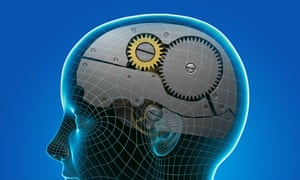
Would you bet against sex robots? AI 'could leave half of world unemployed'

Scientist Moshe Vardi tells colleagues that change could come within 30 years, with few professions immune to effect of advanced artificial intelligence

Machines could put more than half the world’s population out of a job in the next 30 years, according to a computer scientist who said on Saturday that artificial intelligence’s threat to the economy should not be understated.
Expert Moshe Vardi told the American Association for the Advancement of Science (AAAS): “We are approaching a time when machines will be able to outperform humans at almost any task.
“I believe that society needs to confront this question before it is upon us: if machines are capable of doing almost any work humans can do, what will humans do?”
Physicist Stephen Hawking and the tech billionaires Bill Gates and Elon Musk issued a similar warning last year. Hawking warned that AI “could spell the end of the human race” and Musk said it represents “our biggest existential threat”.
The fear of artificial intelligence has even reached the UN, where a group billing itself the Campaign to Stop Killer Robots met with diplomats last year.
Vardi, a professor at Rice University and Guggenheim fellow, said that technology presents a more subtle threat than the masterless drones that some activists fear. He suggested AI could drive global unemployment to 50%, wiping out middle-class jobs and exacerbating inequality.
Unlike the industrial revolution, Vardi said, “the AI revolution” will not be a matter of physically powerful machines that outperform human laborers, but rather a contest between human wit and mechanical intelligence and strength. In China the question has already affected thousands of jobs, as electronics manufacturers, Foxconn and Samsung among them, develop precision robots to replace human workers.
In his talk, the computer scientist alluded to economist John Maynard Keynes’ rosy vision of a future in which billions worked only a few hours a week, with intelligent machines to support their easy lifestyles – a prediction embraced wholesale by Google head of engineering Ray Kurzweil, who believes “the singularity” of super-AI could bring about utopia for a future hybrid of mankind.
Vardi insisted that even if machines make life easier, humanity will face an existential challenge.
“I do not find this a promising future, as I do not find the prospect of leisure-only life appealing,” he said. “I believe that work is essential to human wellbeing.”
Computer scientist Bart Selman told reporters at the conference that as self-driving cars, “household robots, service robots” and other intelligent systems become more common, humans will “sort of be in a symbiosis with those machines, and we’ll start to trust them and start to work with them”.
Selman, a professor at Cornell University, said: “Computers are basically starting to hear and see the way humans do,” thanks to advances in big data and “deep learning”.
Vardi predicted that driving will be almost fully automated in the next 25 years, and asked, for all the benefits of technology, “what can humans do when machines can do almost everything?”
He said that technology has already massively changed the US economy in the last 50 years. “We were all delighted to hear that unemployment went down to 4.8%” this month, he said, “but focusing on the monthly job report hides the fact that for the last 35 years the country has been in economic crisis.”
Citing research from MIT, he noted that although Americans continue to drive GDP with increasing productivity, employment peaked around 1980 and average wages for families have gone down. “It’s automation,” Vardi said.
He also predicted that automation’s effect on unemployment would have huge political consequences, and lamented that leaders have largely ignored it. “We are in a presidential election year and this issue is just nowhere on the radar screen.”
He said that virtually no human profession is totally immune: “Are you going to bet against sex robots? I would not.”
Last year, the consultant company McKinsey published research about which jobs are at risk thanks to intelligent machines, and found that some jobs – or at least well-paid careers like doctors and hedge fund managers – are better protected than others. Less intuitively, the researchers also concluded that some low-paying jobs, including landscapers and health aides, are also less likely to be changed than others.
In contrast, they concluded that 20% of a CEO’s working time could be automated with existing technologies, and nearly 80% of a file clerk’s job could be automated. Their research dovetails with Vardi’s worst-case scenario predictions, however; they argued that as much as 45% of the work people are paid to do could be automated by existing technology.
Vardi said he wanted the gathering of scientists to consider: “Does the technology we are developing ultimately benefit mankind?
“Humanity is about to face perhaps its greatest challenge ever, which is finding meaning in life after the end of ‘in the sweat of thy face shalt thou eat bread’,” he said. “We need to rise to the occasion and meet this challenge.”
In the US, the labor secretary, Thomas Perez, has told American seaports that they should consider robotic cranes and automatic vehicles in order to compete with docks around the world, despite the resistance of unions. In 2013, two Oxford professors predicted that as much as 47% of the US workforce, from telemarketers to legal secretaries and cooks, were vulnerable to automation.
Dire forecasts such as Vardi’s are not without their critics, including Pulitzer-winning author Nicholas Carr and Stanford scientist Edward Geist. Carr hasargued that human creativity and intuition in the face of complex problems is essentially irreplaceable, and an advantage over computers and their overly accurate reputation.
Walking the line between the pessimists and optimists, Martin Ford, author of Rise of the Robots: Technology and the Threat of a Jobless Future, has suggested that automation will come down to politics today, telling National Geographicthat if scientists and governments don’t address the issue “for lots of people who are not economically at the top, it’s going to be pretty dystopian”.

"Women in Science and Technology" program succeeding at AWHS


The STEM fields (Science, Technology, Engineering and Math) are not immune to the gender gap problem. In fact, women total only one quarter of all professionals in the areas of engineering and computer science. At Archbishop Williams High School, however we are proud to report that no such gender gap exists.
For the past three years, AWHS has participated in the renowned “Women in Science Program” at Boston College. Chemistry teacher and former academic dean Mrs. Jane Funderburk identified the opportunity, made the connection and chose a group of 13 aspiring female scientists to work with BC professors and undergraduates on its Chestnut Hill campus over four consecutive Saturdays in January and February. Participation in this project AWHS’ female scientists will gain invaluable experiences as they explore the fields of science, physics, chemistry, geoscience, biology and psychology, among others.
In addition to gaining knowledge, insight and practical experience about the many careers available in science, the participants gain an understanding of fundamental lab techniques, and the theory behind the protocols, all while gaining a deeper appreciation for the discipline of human inquiry.
By way of example, our students recently performed an experiment involving using chromatography (separating of mixtures) to test a developing solvent for the separation of food dye pigments. They also experimented using silver nitrate and inducing an oxidation-reduction (redox) reaction.
The AWHS Department is very proud of the advanced level of extra-classroom opportunities available to these enthusiastic students, especially at a top research university like BC. AWHS Science Department Chair, Mr. Ray Whitehouse remarked “Programs like the Women in Science and Technology are very important because we need to actively recruit and produce more women into STEM fields, particularly in engineering.” Whitehouse continued, “The opportunity to interact with their fellow science-minded peers in secondary and higher education and to learn from trained collegiate scientists is simply not available to students at most high schools.”

కరోనా కోవిడ్ -19 గురించి ఏ వికీపీడియా మీకు చెప్పలేము?

కరోనా కోవిడ్ -19 గురించి ఏ వికీపీడియా మీకు చెప్పలేము? మిమ్మల్ని మీరు రక్షించుకోండి  Your మీ చేతులను తరచుగా కడగాలి Eyes మీ కళ్ళు, న...